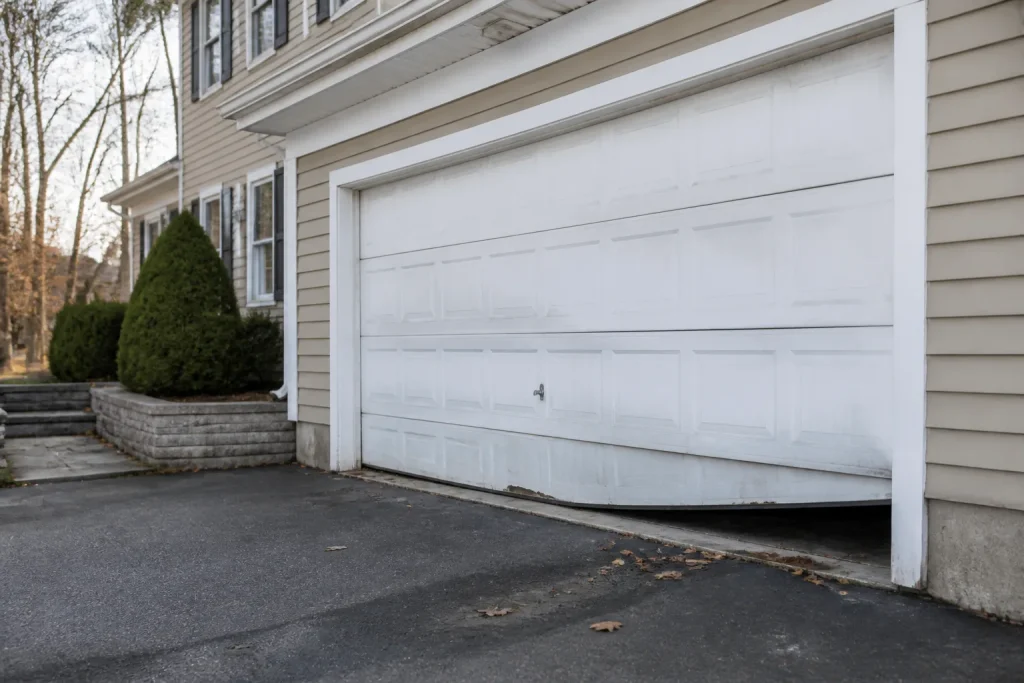
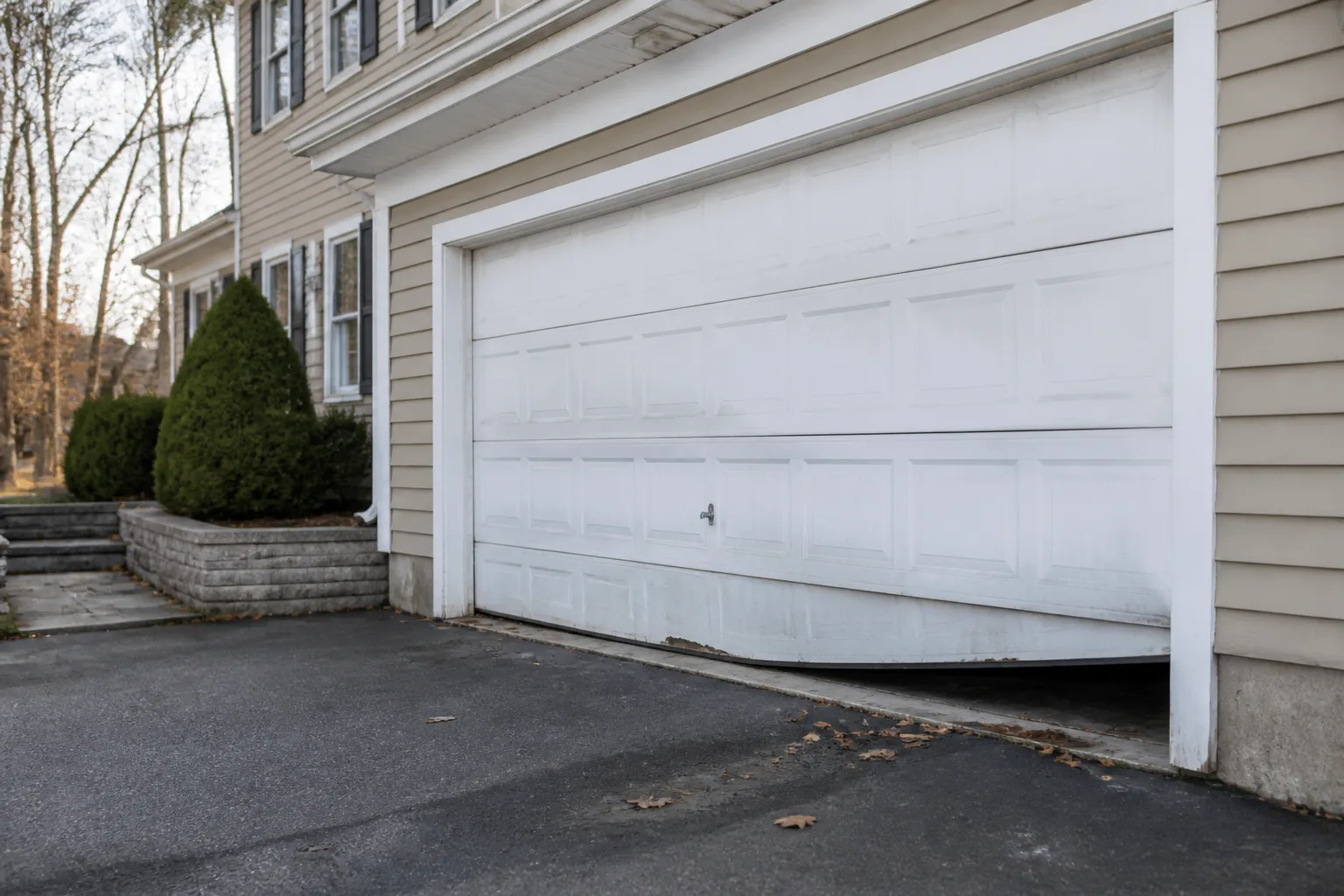
Top Signs You Need Garage Door Service – Don’t Ignore These
A garage door that takes two seconds longer to open than it did six months ago isn’t just slow. It’s telling you the opener is working harder than it should, and that extra strain is exactly how motors overheat and fail before they reach their rated lifespan. Most homeowners file these small changes under “annoying but fine” until something breaks outright. If you’d rather not diagnose it yourself, call (855) 658-4223 and we’ll take a look.
Here’s the reframe that matters: the signs below aren’t cosmetic. They’re mechanical stress signals, and treating them as data is how you avoid a small repair turning into a large one.
Key Takeaways
- Slow operation usually means opener strain or spring tension loss, not a lazy door.
- Grinding points to roller wear or debris in the track.
- A door that reverses unexpectedly is a sensor or limit switch problem, and it’s a safety issue.
- One ignored component stresses the next: worn roller to track damage to panel stress.
- Massachusetts cold snaps are when a marginal spring finally snaps.
Why “Minor” Symptoms Are Actually Mechanical Data
Every part of your garage door system works within a designed tolerance. Springs carry a specific tension, rollers ride a specific path, and the opener exerts a specific force to lift a specific weight. When one part drifts outside its tolerance, the rest of the system compensates, and that compensation is what you hear and feel.
A door that shudders on the way up isn’t being dramatic. It’s telling you a roller has flat-spotted or a hinge has loosened, and the opener is now pulling against resistance it wasn’t built for. Left alone, that resistance transfers into the track, the panels, and eventually the motor. We see this constantly in Waltham, where older homes often still run the original hardware on doors that have cycled thousands of times.
The cascade failure principle is simple: a $15 roller ignored long enough becomes a track replacement, which becomes panel stress, which becomes a repair bill many times larger than the original fix. The symptom is cheap to address. The consequence isn’t.
Sign #1: The Door Opens Slower Than It Used To
Slow operation almost always traces back to one of two things: the opener is straining, or the springs have lost tension. Both are cumulative problems. A torsion or extension spring is under heavy load every single cycle, and as it fatigues it delivers less lift, so the opener picks up the slack. That’s the 30% extra work that shortens motor life.
Watch for these clues:
- The door hesitates at the start of its travel, then catches up.
- The opener sounds louder or more labored than it did last season.
- The door feels heavier when you disengage the opener and lift it by hand (test this carefully, and only if the door is balanced).
- You’ve adjusted the force settings on a Genie or LiftMaster unit more than once.
Force settings are a diagnostic tool, not a fix. Cranking them up masks the real problem, which is usually tension loss in the springs. Our garage door spring repair work starts with measuring actual tension, not guessing.
Sign #2: Grinding, Squealing, or Rattling
Noise is the easiest signal to read once you know what each sound means. Grinding usually means worn rollers or debris in the track. Squealing points to dry hinges or a failing bearing. Rattling often means loose hardware or a panel that’s working itself free.
A quick translation guide:
- Grinding: steel rollers that have worn flat, or grit and leaves packed into the track channel.
- Squealing: dry moving parts, or a bearing on its way out.
- Rattling: loose bolts, a sagging hinge, or a panel under stress.
- Banging at the top or bottom of travel: limit switch drift, which we cover below.
On a Clopay or Amarr door, the panels are heavy and the hardware does real work. Noise that shows up gradually is normal wear. Noise that appears suddenly usually has a specific cause, and the sooner it’s diagnosed the less it costs. In Waltham, we recommend a listen-and-look every few months, especially after a stretch of cold weather.
Sign #3: The Door Reverses Before It Closes
A door that goes down partway and then reverses is a safety system doing its job, or failing to. The two usual culprits are misaligned safety sensors or a limit switch that has drifted out of position. This is a genuine safety issue, not a nuisance: a door that reverses unpredictably can also fail to reverse when it should.
What you can safely check:
- Look at the two sensors near the floor. Are they pointed at each other, or has one been knocked out of line?
- Check for anything blocking the beam, including cobwebs, leaves, or a stored item.
- Look at the indicator lights on the sensor housing if your model has them.
What you shouldn’t touch: the limit switch adjustment or the force settings inside the opener housing. Those are calibration tasks, and getting them wrong makes the door less safe. If sensor alignment doesn’t fix it, that’s a garage door opener repair call, and it’s one we handle across most major opener brands.
Sign #4: Cable Fraying, Roller Wear, and Spring Gaps (Safe Visual Checks)
Some checks you can do from a safe distance, with your eyes only. These three tell you a lot without putting your hands anywhere near moving or high-tension parts.
- Cable fraying: Look at the cables running along the sides. Frayed strands, a kink, or a cable that looks slack are all red flags. Don’t touch them. Cables are under tension and a snapped cable is dangerous.
- Roller wear: Look at the rollers where they meet the track. A worn roller looks flat-spotted or wobbly rather than round and seated.
- Spring gap: On a torsion spring above the door, a visible gap in the coil means the spring has broken. On extension springs, look for a stretched or sagging spring. Either one means stop using the door.
A word on safety: springs are under extreme tension and manufacturers warn against DIY repair for good reason. A trained technician is the only safe route. The same goes for cables. Look, note what you see, and call. For anything spring-related, our garage door repair team treats it as a same-visit job.
The Massachusetts Winter Factor: Why Springs Snap in January
Cold changes the physics of a garage door. Metal contracts in low temperatures, and a spring that was marginal in September carries less reserve tension when the thermometer drops. That’s why a spring that seemed fine all fall can let go on the first genuinely cold morning. It’s not bad luck. It’s a component that was already at the edge of its tolerance getting pushed over it.
In Waltham and the surrounding neighborhoods, we see a real spike in spring failures through the coldest weeks of the year. The same contraction affects tracks, which can bow slightly and throw rollers off their line, and it stiffens lubricant so the opener works harder on every cycle.
A practical winter routine: before the first hard freeze, listen to the door, watch for slow operation, and check the safe visual items above. If anything’s marginal, address it in the fall rather than waiting for the January morning when it fails. A Wayne Dalton or Chamberlain system handles cold fine when it’s in good condition. It’s the worn parts that don’t.
When to Call a Pro vs. When to Watch and Wait
Not every symptom needs a service call the same day. Here’s a framework that separates proactive maintenance from reactive repair. We’ve used it across thousands of Waltham-area homes.
Call now (safety or security issue)
- Broken spring, snapped cable, or a door stuck open or hanging unevenly.
- Door reverses unpredictably or fails to reverse when tested.
- Door off its track or a panel that’s come loose.
- Any situation where the door won’t secure the house.
Schedule within a few weeks
- Gradual slowing, new noise, or force-setting drift.
- Visible roller wear or minor track debris.
- An opener that’s gotten louder without any other symptom.
Proactive maintenance interval
For most homes, a professional inspection once a year keeps the system ahead of wear, plus a quick visual check every few months and a full look before winter. Doors that cycle heavily (multiple times a day for a busy household) benefit from more frequent attention.
When to call a pro
If you’re seeing more than one symptom at once, or a symptom that’s gotten worse over a few weeks, that’s the point to stop watching and start diagnosing. Our technicians have up to 10 years of experience across the brands you’re most likely to own.
Related services in Waltham: Waltham Garage Door Repair Pros handles repair, opener work, spring replacement, and full installation.
The Bottom Line
Those small signs are diagnostic data, not background noise. Slow operation, new noise, and a door that reverses are all telling you the system is running outside its design tolerances, and every ignored cycle adds wear that shortens the life of everything connected to it. Reading the symptoms early is the cheapest repair you’ll ever make.
If you’re in Waltham and need help, Waltham Garage Door Repair Pros offers free estimates. Call (855) 658-4223. We work on the brand you already own, from Clopay and Amarr doors to Genie and LiftMaster openers, and we diagnose and fix in a single visit wherever possible. For a door that’s beyond saving, we also handle full new installation, so you don’t need a second contractor.
Frequently Asked Questions
The most common signs are slow operation, new grinding or squealing noises, a door that reverses before closing, visible cable fraying or roller wear, and a gap in the spring coil. Any one of these is worth a professional look. Two or more together usually means the system is under real strain. Call (855) 658-4223 for an exact quote; estimates are free.
No. Springs are under extreme tension, and manufacturers and industry groups warn against DIY replacement because the stored energy can cause serious injury. We recommend leaving spring work to a trained technician. In Waltham, our spring repair is a core specialty, not an add-on. Call (855) 658-4223 and we’ll get it sorted with the price quoted and agreed before any work starts.
Sometimes. Gradual noise usually means normal wear on rollers, hinges, or bearings, and it’s inexpensive to correct. Sudden noise, or grinding paired with slow operation, points to a real mechanical problem that will grow if ignored. If it’s new or getting worse, call (855) 658-4223 for a free estimate.
Once a year is a solid baseline for most homes, with a quick visual check every few months and a closer look before each Massachusetts winter. Doors that cycle heavily benefit from more frequent attention. If you’d rather have a trained eye on it, call (855) 658-4223; estimates are free.
Written by the team at Waltham Garage Door Repair Pros.
Need Garage Door Help?
Call Waltham Garage Door Repair Pros - the local pro we connect you with is licensed and insured, here with fast after-hours help in Waltham.
(855) 658-4223